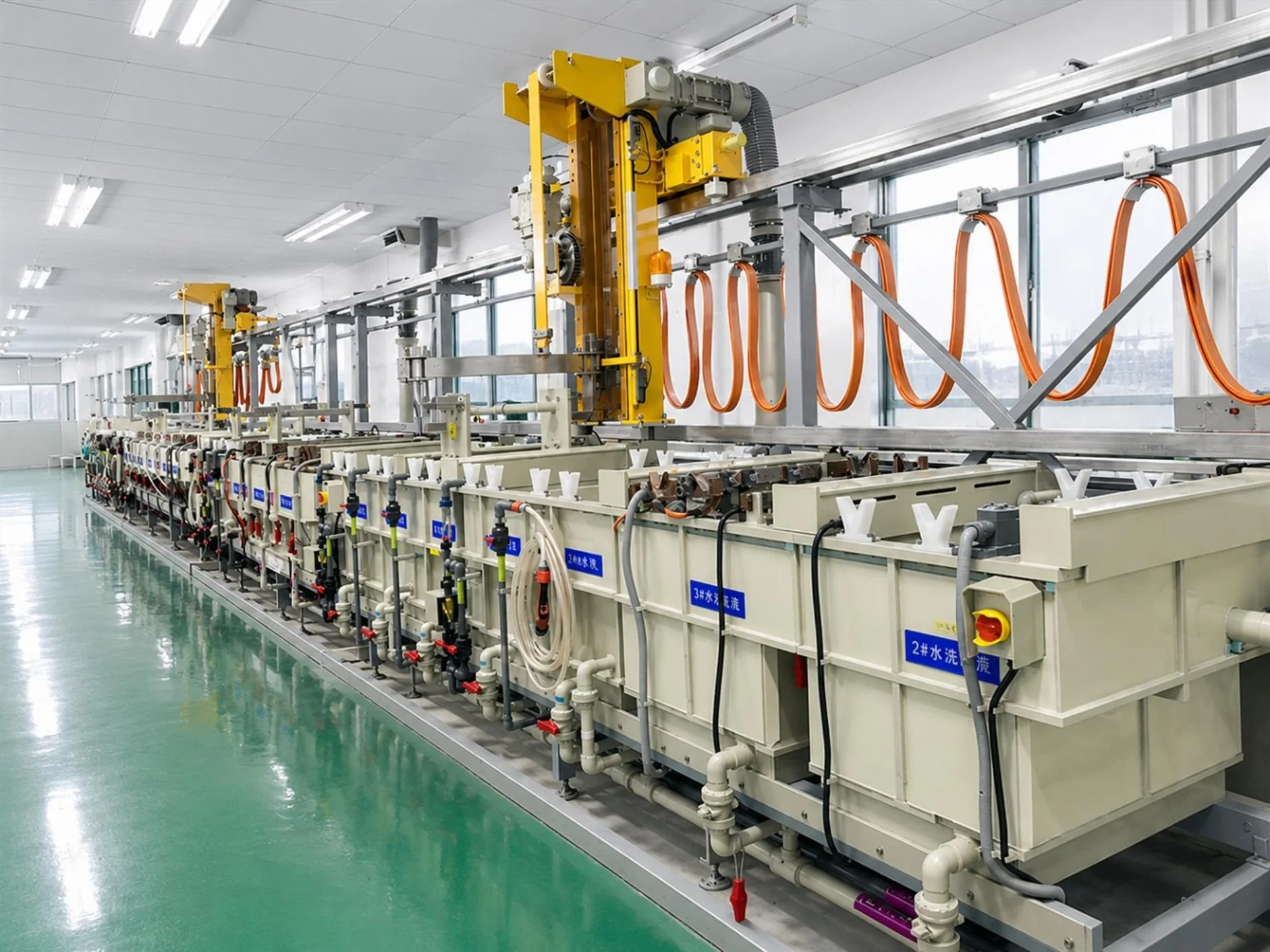
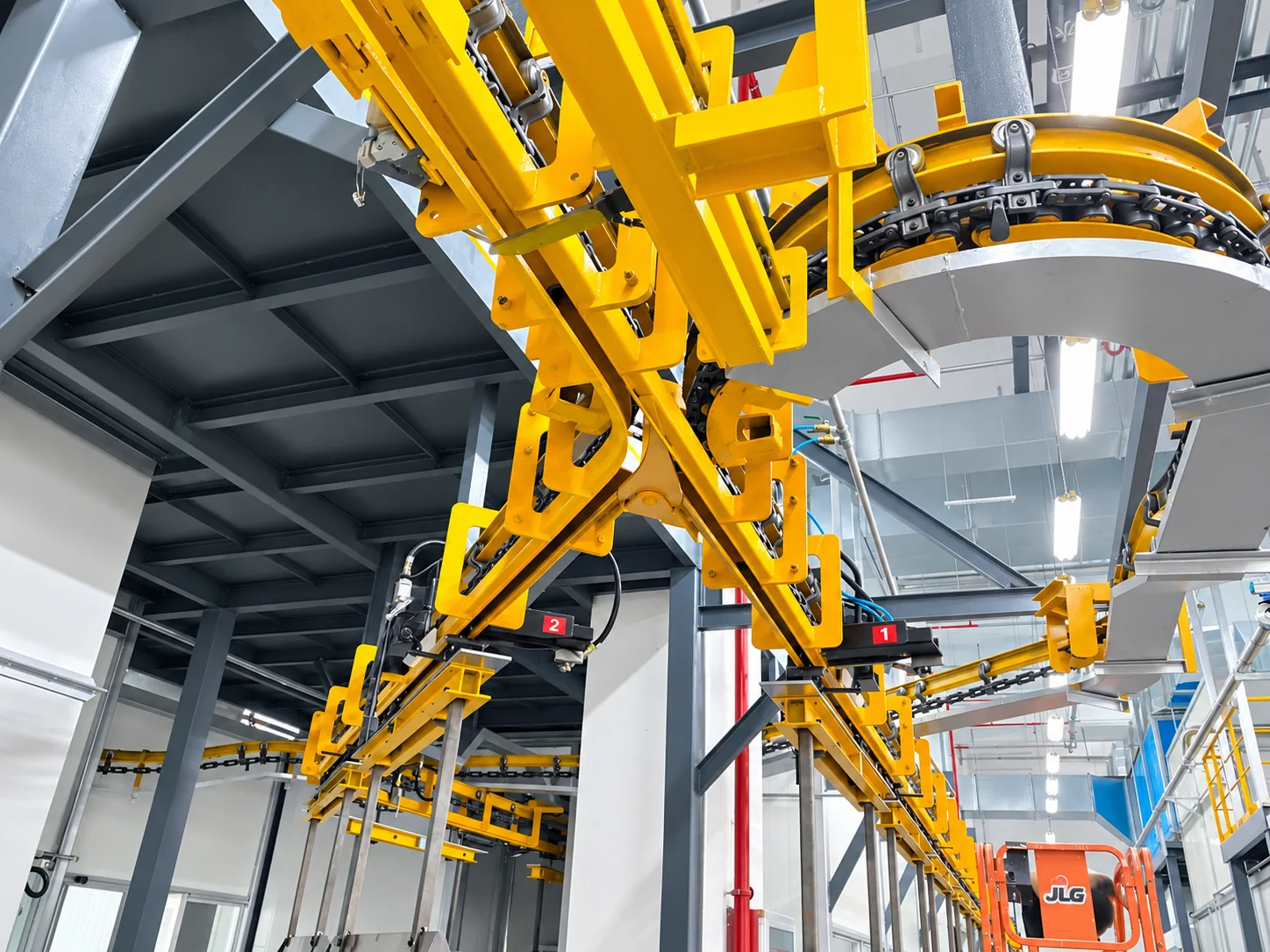
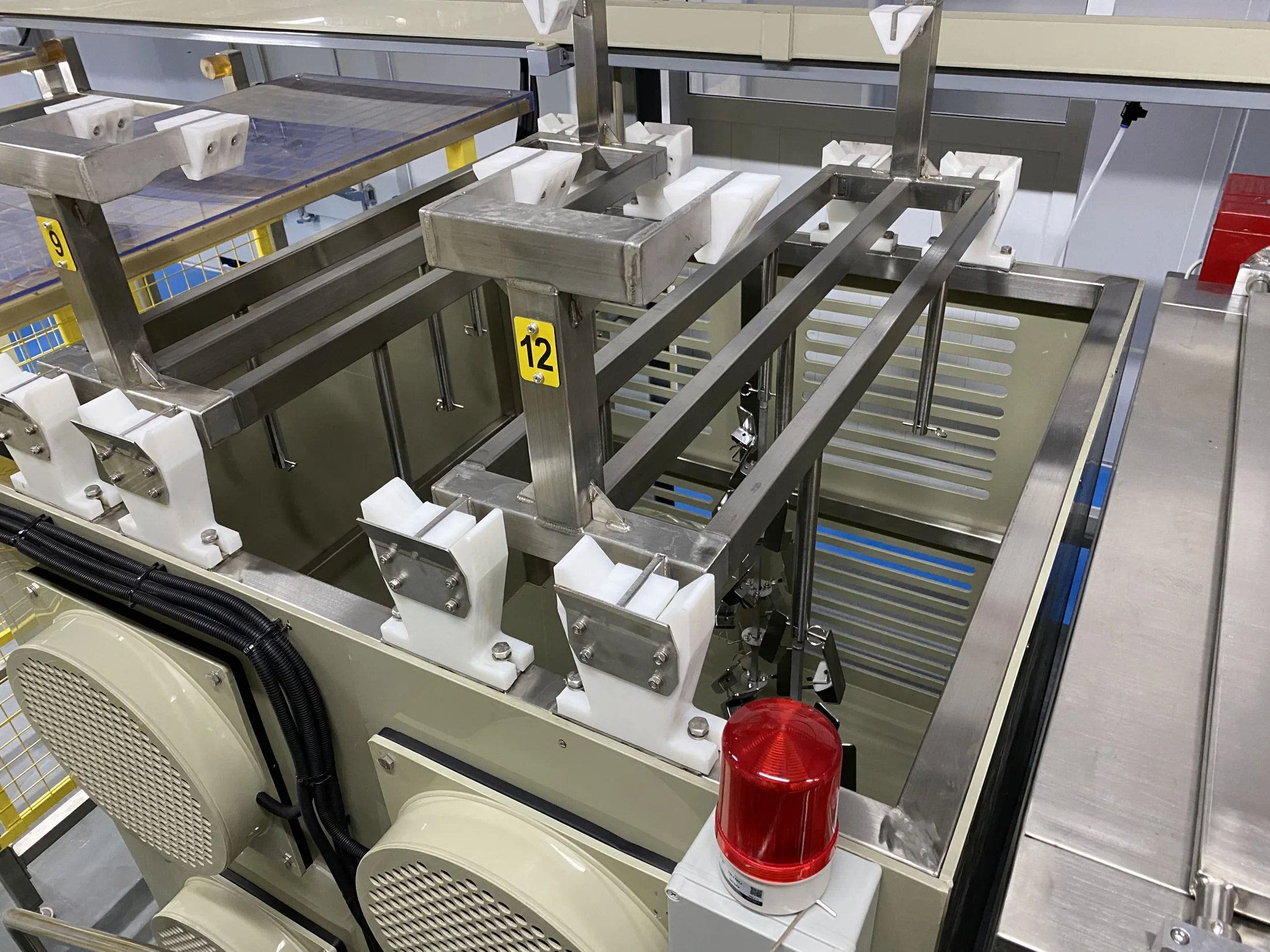
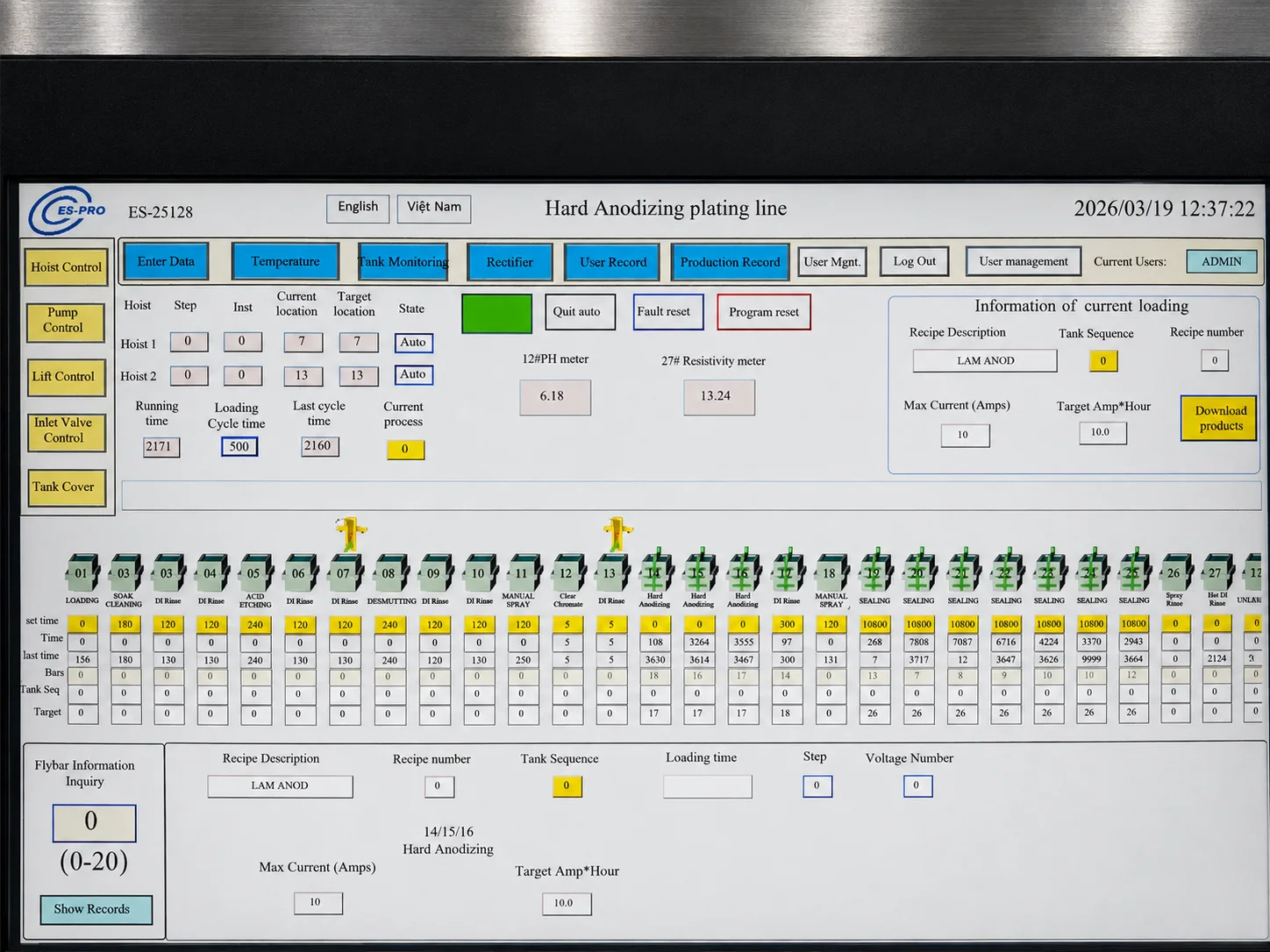
System overviewEngineered around your production requirement
Efficient loading and unloading operations are essential for maintaining continuous production and reducing bottlenecks in surface treatment facilities. A properly engineered system ensures that workpieces are securely positioned, transferred, and released without disrupting the production cycle.
System configurations can include automatic rack engagement and disengagement, flybar positioning stations, lifting platforms, powered roller conveyors, chain conveyors, and buffer storage areas. These mechanisms are selected according to product geometry, rack structure, handling frequency, and available installation space.
Special consideration is given to load stability, positioning accuracy, transfer synchronization, and accessibility for maintenance. Buffer stations can be incorporated to separate loading and unloading activities from the main processing line, allowing operators to prepare incoming batches while completed products are removed.
The system can also support product identification, batch tracking, and production scheduling through integration with existing factory management systems. Modular configurations allow manufacturers to accommodate changing production volumes, different product types, and future automation requirements.
Typical process architectureProcess flow
Incoming Workpiece PreparationWorkpiece IdentificationAutomatic Loading StationRack / Flybar PositioningAutomatic Pickup & TransferIntegration with Main Processing LineSurface Treatment ProcessTransfer to Unloading StationAutomatic Rack / Flybar ReleaseFinished Workpiece UnloadingInspection & Collection
The displayed flow is an engineering reference. The final sequence, chemistry, dwell time and control points are confirmed for the customer’s process.
ApplicationsWhere this system fits
Automatic Loading and Unloading Systems are suitable for surface treatment facilities requiring efficient material handling, reduced manual intervention, and continuous production flow.
Automatic Electroplating Lines: Streamline the loading and unloading of racks and workpieces before and after plating operations.
Anodizing & Hard Anodizing Lines: Handle heavy aluminum components and large racks with stable positioning and controlled movement.
Barrel Plating Lines: Support automatic loading of components into plating barrels and unloading after processing.
Electroless Plating Lines: Facilitate consistent rack handling and smooth batch transitions between production cycles.
Chemical Cleaning & Pretreatment Lines: Automate material handling for degreasing, pickling, activation, and cleaning operations.
Conveyor-Based Production Lines: Connect loading stations, transfer conveyors, buffer areas, and unloading stations for continuous material flow.
High-Volume Manufacturing Facilities: Support repetitive handling operations, batch identification, and production scheduling to improve throughput.
Existing Production Line Upgrades: Retrofit manual loading and unloading stations with automated handling equipment to reduce labor requirements and improve workplace safety.