System overviewEngineered around your production requirement
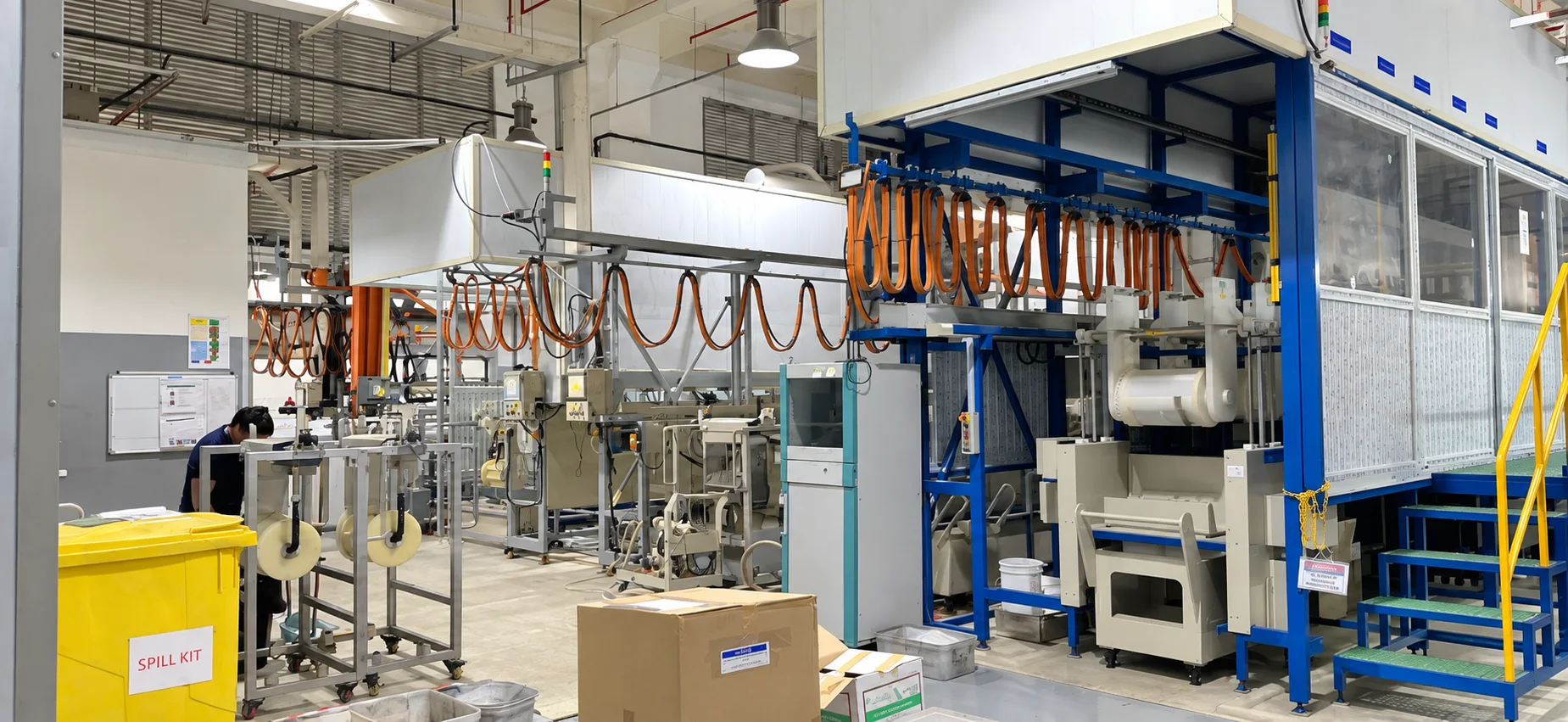
Converting a manual surface treatment line into an automated system requires careful evaluation of the existing production arrangement, equipment condition, and process requirements. The objective is to establish a more structured and repeatable production workflow while making effective use of existing infrastructure.
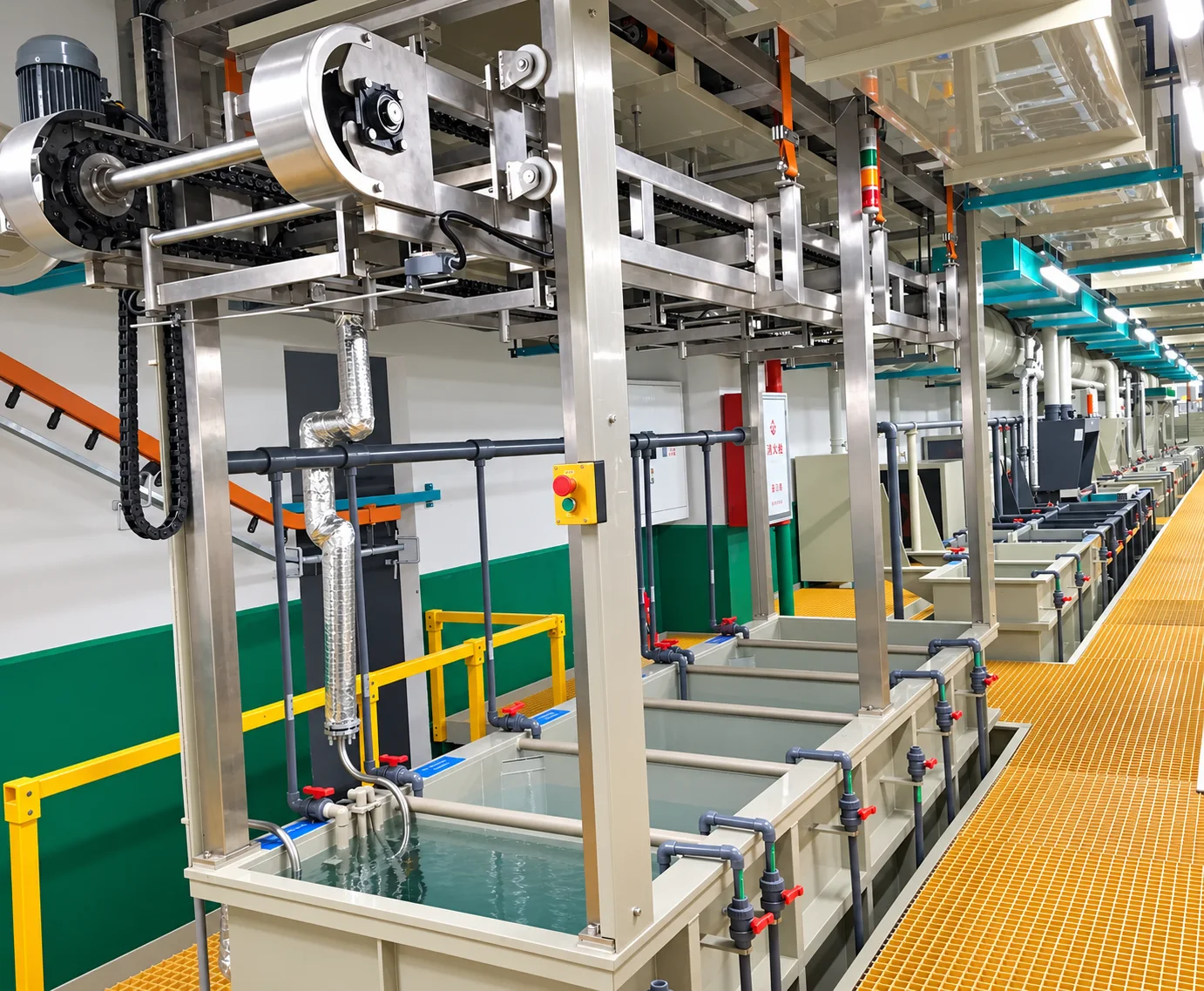
The conversion process begins with an assessment of tank spacing, structural supports, loading capacity, available overhead clearance, and access for maintenance. Particular attention is given to whether existing tanks and supporting structures can accommodate automatic transfer equipment or require modification.
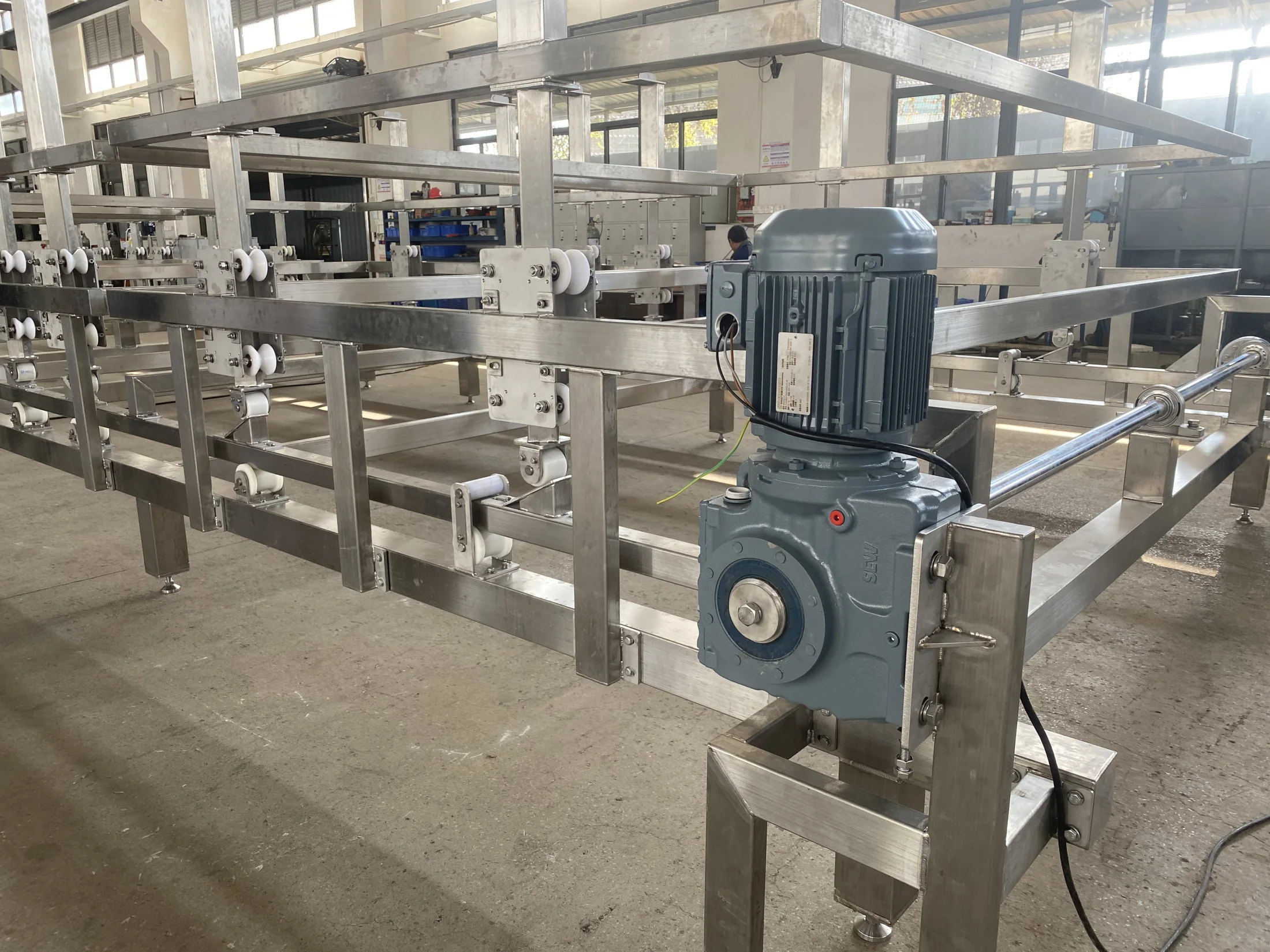
Production sequences are then reviewed to determine suitable hoist configurations, transfer routes, processing priorities, and cycle times. Depending on the production layout, the conversion may involve installing overhead gantry structures, extending tank support frames, rearranging loading stations, or introducing intermediate transfer positions.
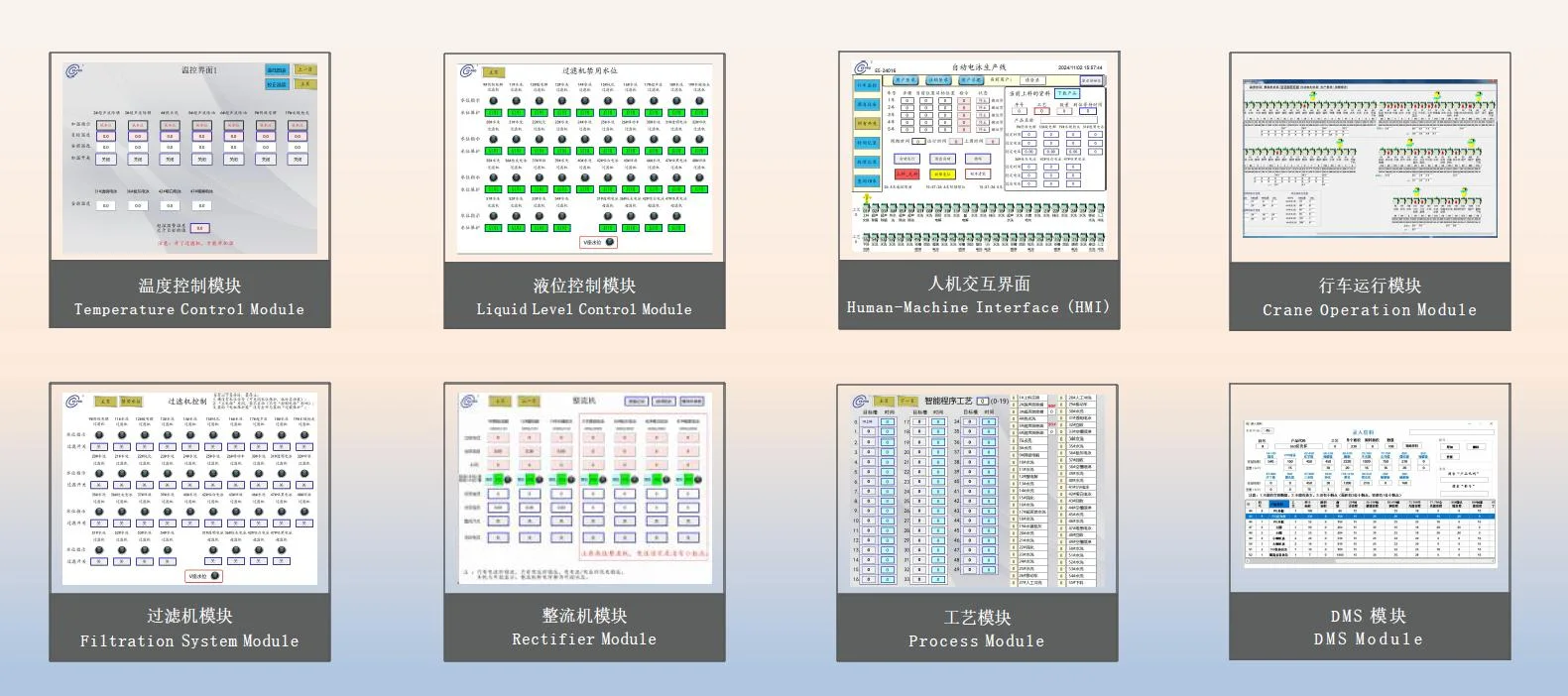
Automated operation allows different products to follow predefined treatment sequences, with controlled immersion times, lifting movements, and transfer priorities. For facilities processing multiple product types, flexible recipe configurations help accommodate variations in treatment requirements without extensive mechanical adjustments.
Implementation can be carried out in planned stages, including mechanical modifications, electrical installation, control system integration, testing, and production validation. This approach helps reduce operational disruption while providing a practical pathway from labor-intensive production toward a more standardized, traceable, and scalable manufacturing process.
Typical process architectureProcess flow
Existing Manual Line AssessmentEquipment & Tank Layout EvaluationAutomation Feasibility StudyProduction Flow & Cycle Time AnalysisAutomatic Hoist & Transfer System DesignMechanical & Structural ModificationsPLC, HMI & Control System IntegrationAutomatic Recipe ConfigurationEquipment InstallationSystem Testing & Safety VerificationTrial Production & Process OptimizationFinal CommissioningOperator Training & Technical Documentation
The displayed flow is an engineering reference. The final sequence, chemistry, dwell time and control points are confirmed for the customer’s process.
ApplicationsWhere this system fits
Manual-to-Automatic Line Conversion solutions are suitable for existing surface treatment facilities seeking to reduce manual operations, standardize production processes, and improve manufacturing efficiency.
Manual Electroplating Lines: Convert manually operated rack plating processes into automated production lines with controlled workpiece transfer and immersion sequences.
Anodizing & Hard Anodizing Lines: Automate the handling of aluminum components through pretreatment, anodizing, rinsing, and sealing stages.
Manual Chemical Cleaning Lines: Introduce automatic lifting and transfer systems for degreasing, pickling, activation, and multi-stage rinsing operations.
Electroless Plating Lines: Improve process repeatability by automating workpiece movement and controlling chemical treatment durations.
Manual Rack Plating Operations: Integrate automatic gantry hoists and flybar handling mechanisms to reduce repetitive lifting and positioning tasks.
Small & Medium-Sized Production Facilities: Implement practical automation solutions within limited factory space while retaining suitable existing tanks and equipment.
High-Mix Production Lines: Support multiple product types and treatment sequences through programmable recipes and flexible production scheduling.
Production Capacity Expansion: Increase production throughput by reducing transfer delays, optimizing processing sequences, and improving equipment utilization.
Labor-Intensive Surface Treatment Facilities: Reduce operator involvement in repetitive material handling and minimize direct exposure to chemical processing areas.