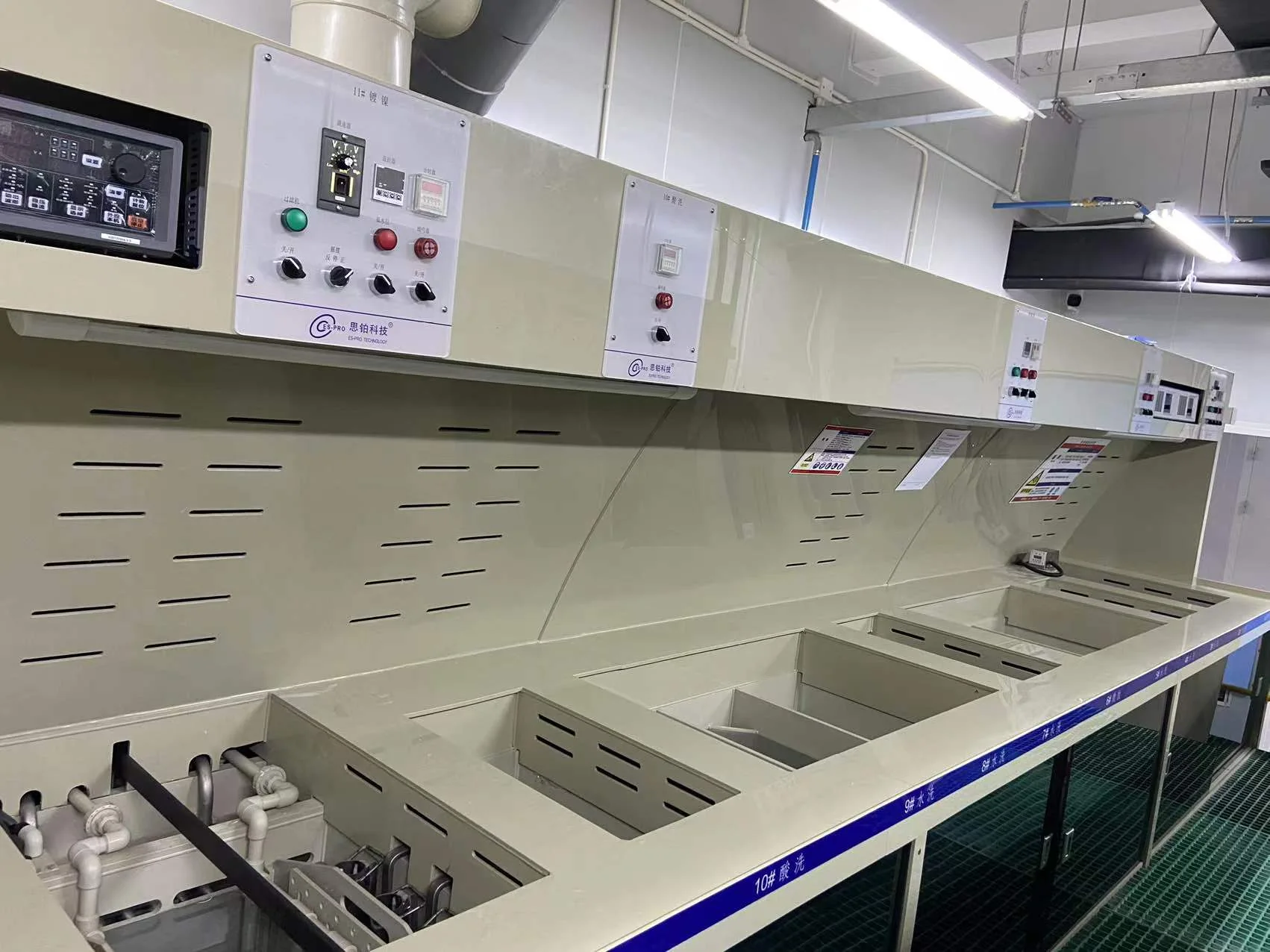
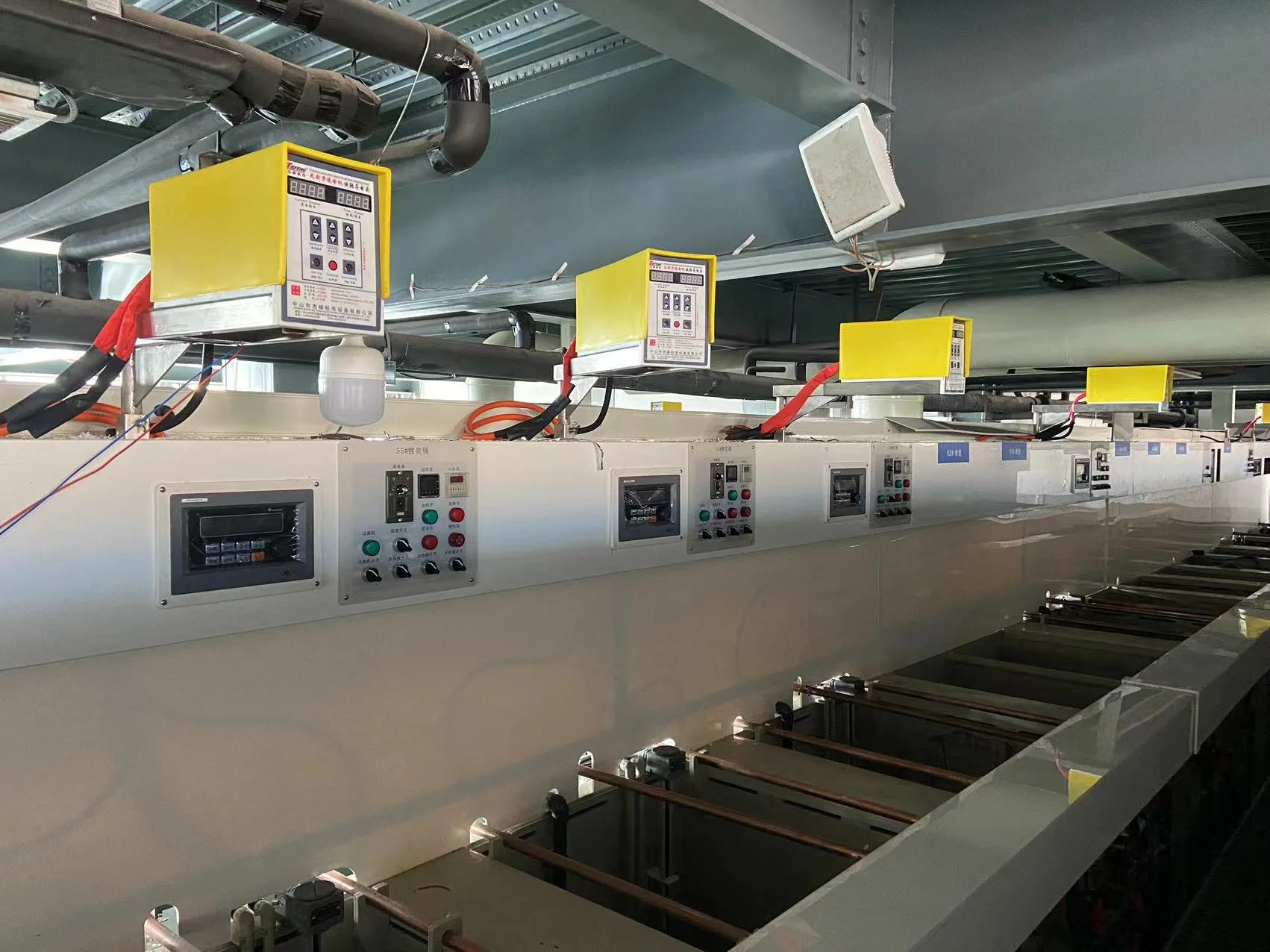
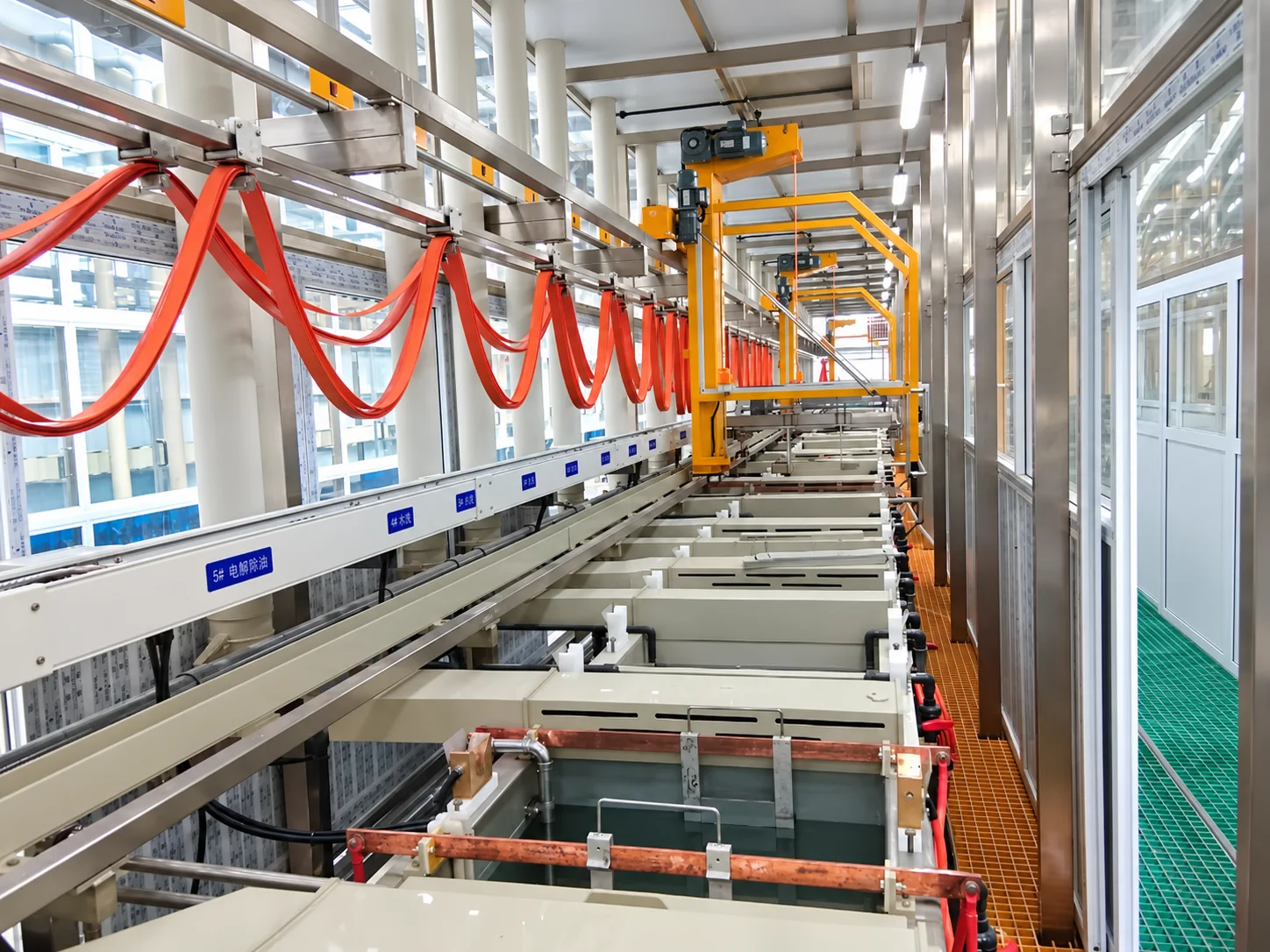
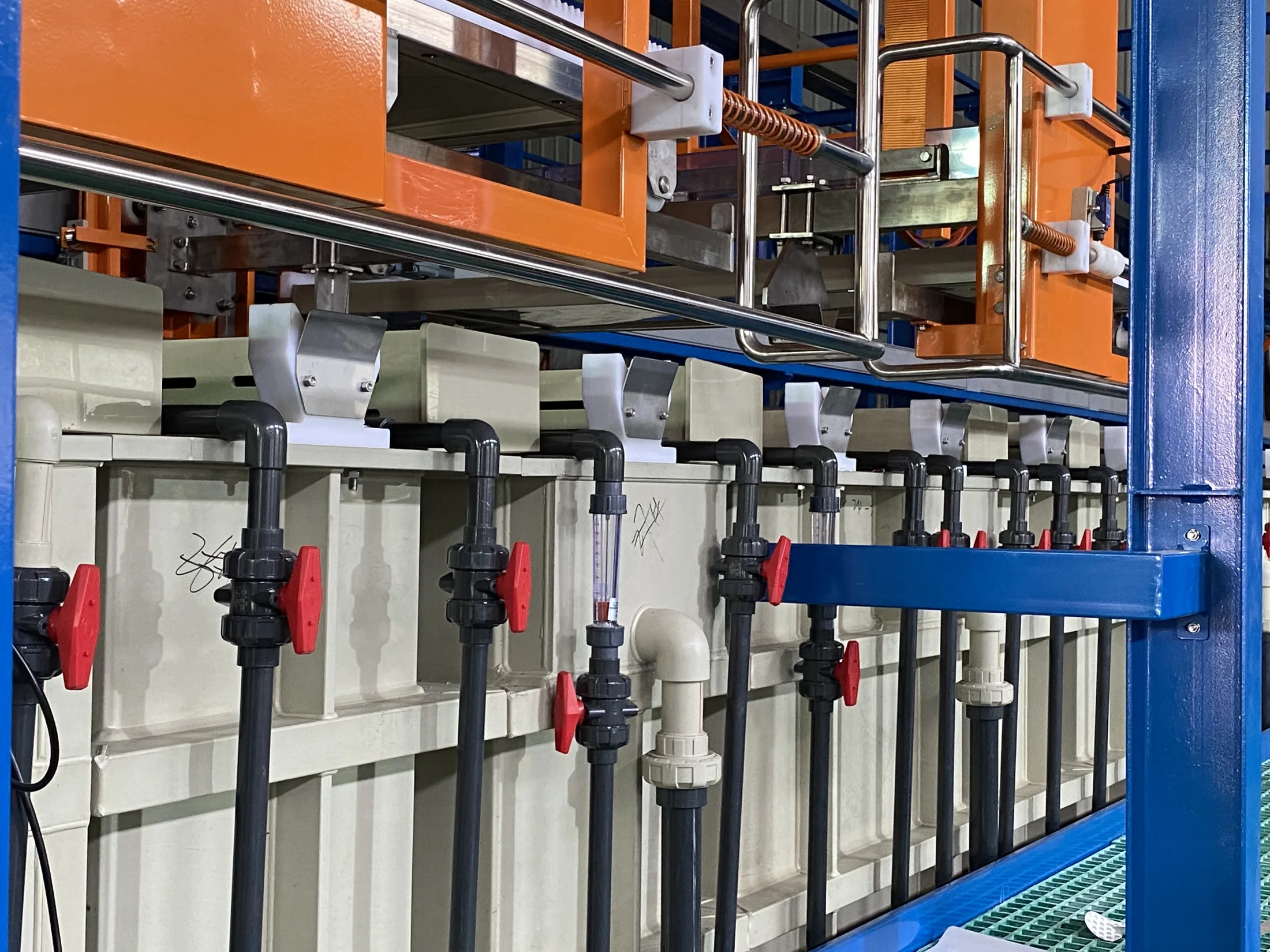
System overviewEngineered around your production requirement
A silver plating line is designed to deposit a controlled silver coating onto metal components to improve electrical conductivity, corrosion resistance, solderability and surface appearance.
The process can be applied to a wide range of parts used in electrical, electronic, automotive and industrial applications, especially where reliable electrical contact and low contact resistance are required.
Depending on the product and production volume, the line can be configured for rack, barrel or continuous processing. Process control typically focuses on maintaining stable current density, solution condition, temperature, agitation and plating time to achieve consistent coating thickness and surface quality.
ES-PRO can integrate the plating process with pretreatment, rinsing, filtration, heating or cooling, rectification, exhaust, chemical dosing, automation and production monitoring to support stable and repeatable operation.
Typical process architectureProcess flow
LoadingDegreasingRinsingActivationCopper / Nickel Undercoat (if required)Silver PlatingRinsingAnti-Tarnish TreatmentDI RinsingDryingUnloading
The displayed flow is an engineering reference. The final sequence, chemistry, dwell time and control points are confirmed for the customer’s process.
ApplicationsWhere this system fits
Silver plating lines are commonly used for components that require high electrical conductivity, low contact resistance, good solderability and reliable surface performance.
Typical applications include electrical contacts, connectors, terminals, busbars, switchgear components, electronic parts, automotive electrical components, precision hardware and selected decorative products.
Silver plating is widely used in the electrical, electronics, automotive, energy, telecommunications and industrial equipment sectors.