System overviewEngineered around your production requirement
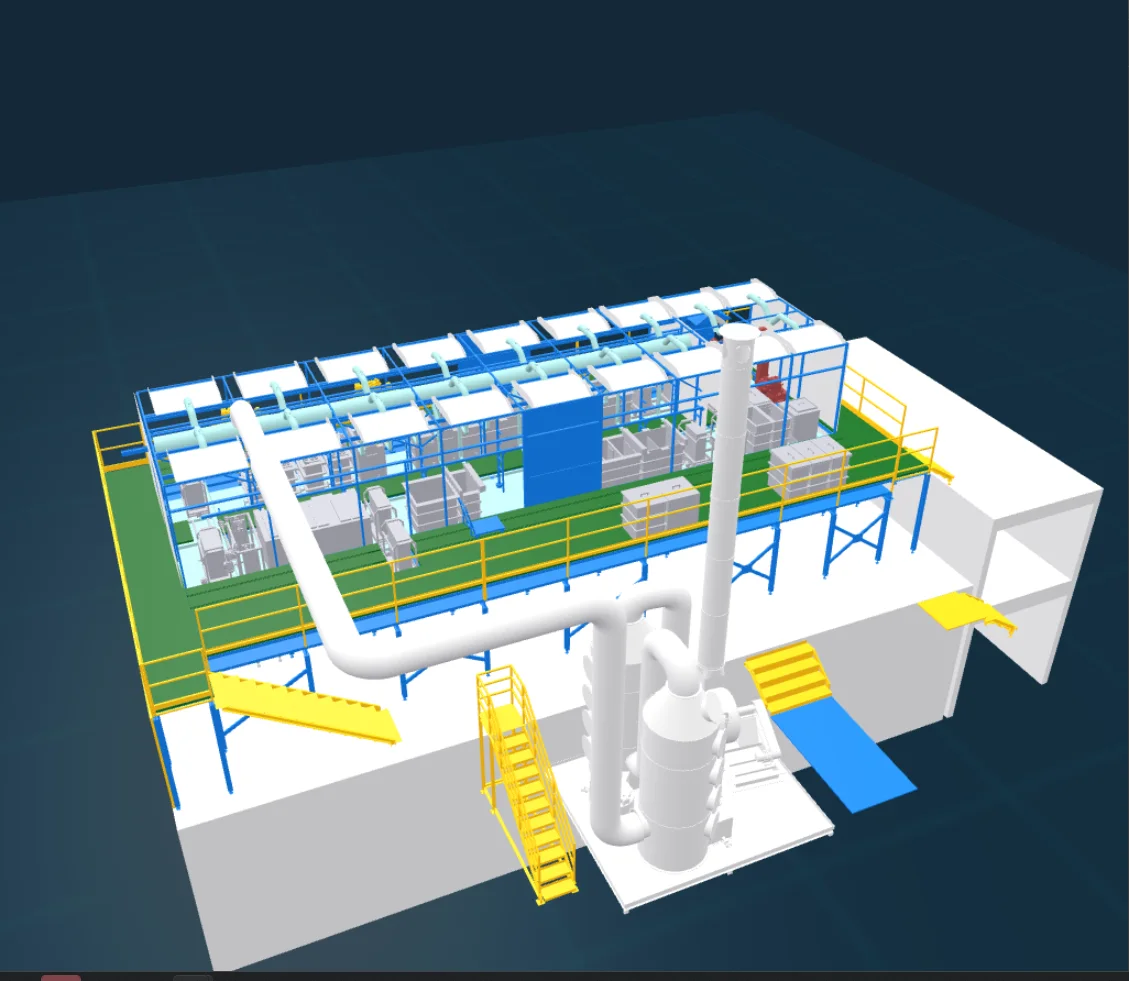
Metal Pretreatment Lines are designed to prepare metal surfaces for subsequent electroplating, powder coating, painting, anodizing, and other finishing processes. Effective pretreatment removes oils, grease, oxides, rust, and surface contaminants, creating suitable surface conditions for improved coating adhesion, corrosion resistance, and long-term product performance.
A typical pretreatment line consists of multiple processing stages, including alkaline degreasing, ultrasonic cleaning, water rinsing, acid pickling, surface activation, and chemical conversion treatment. The process sequence is developed according to substrate materials, contamination levels, surface quality requirements, and the specifications of the subsequent finishing process.
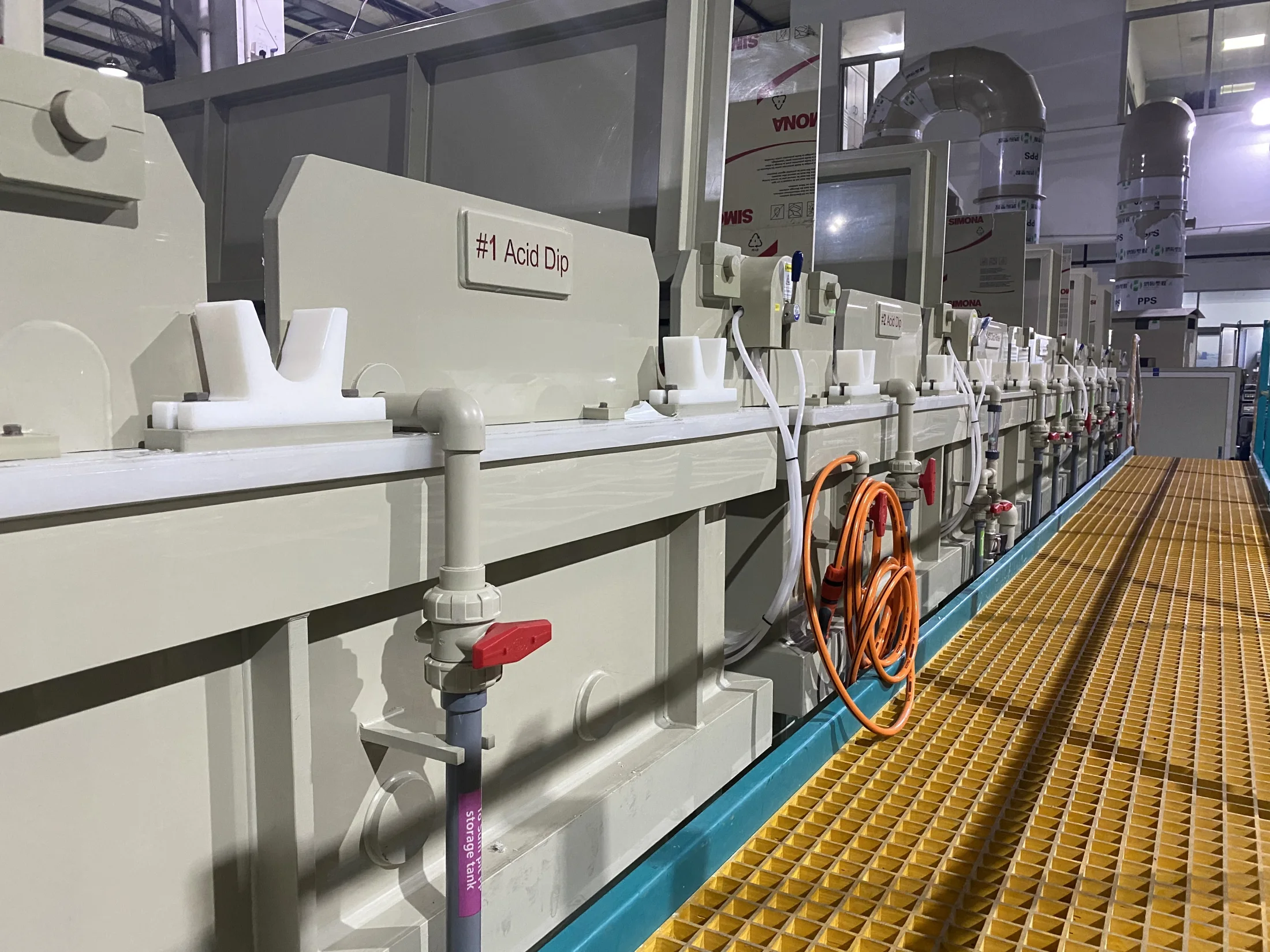
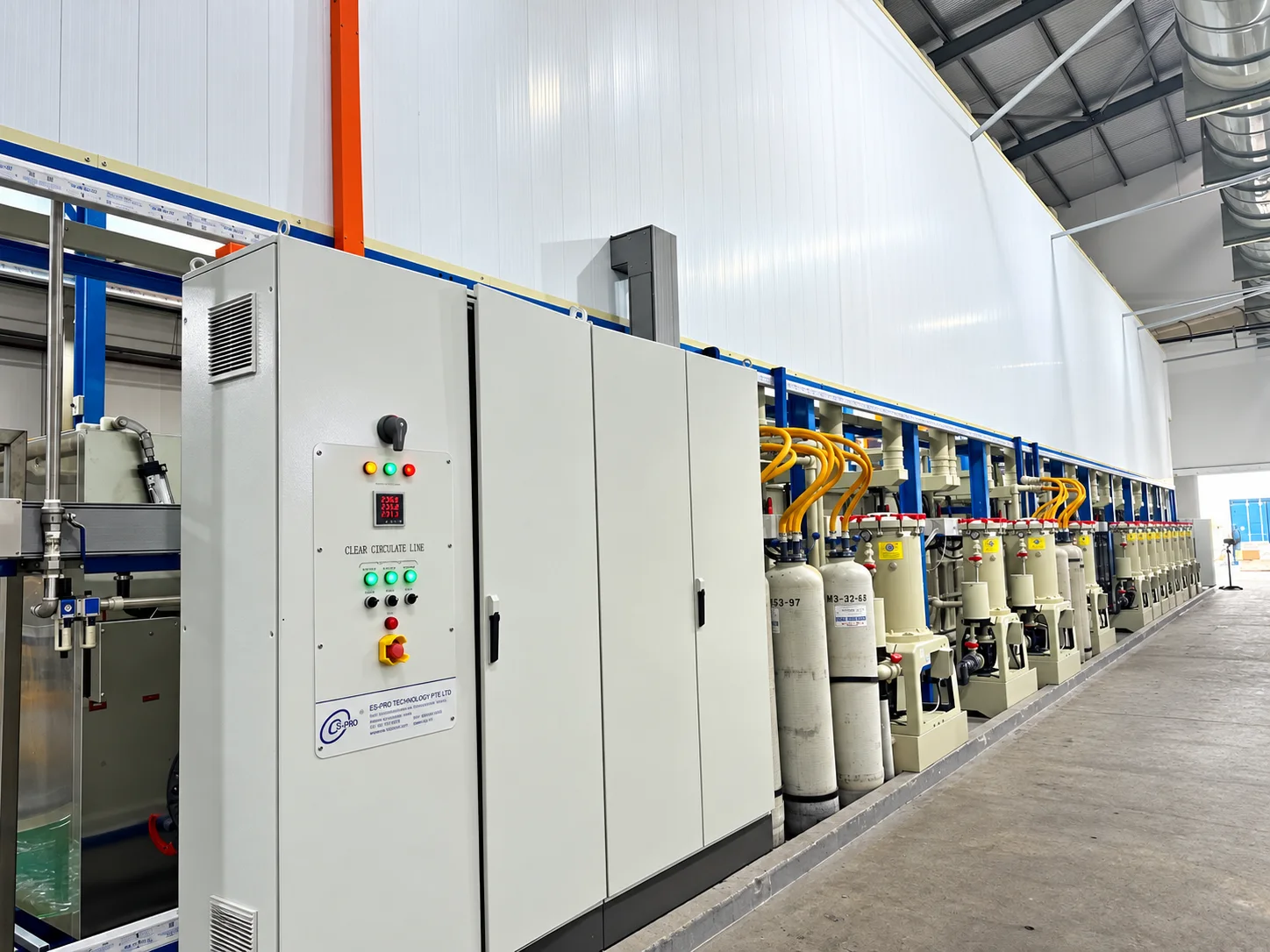
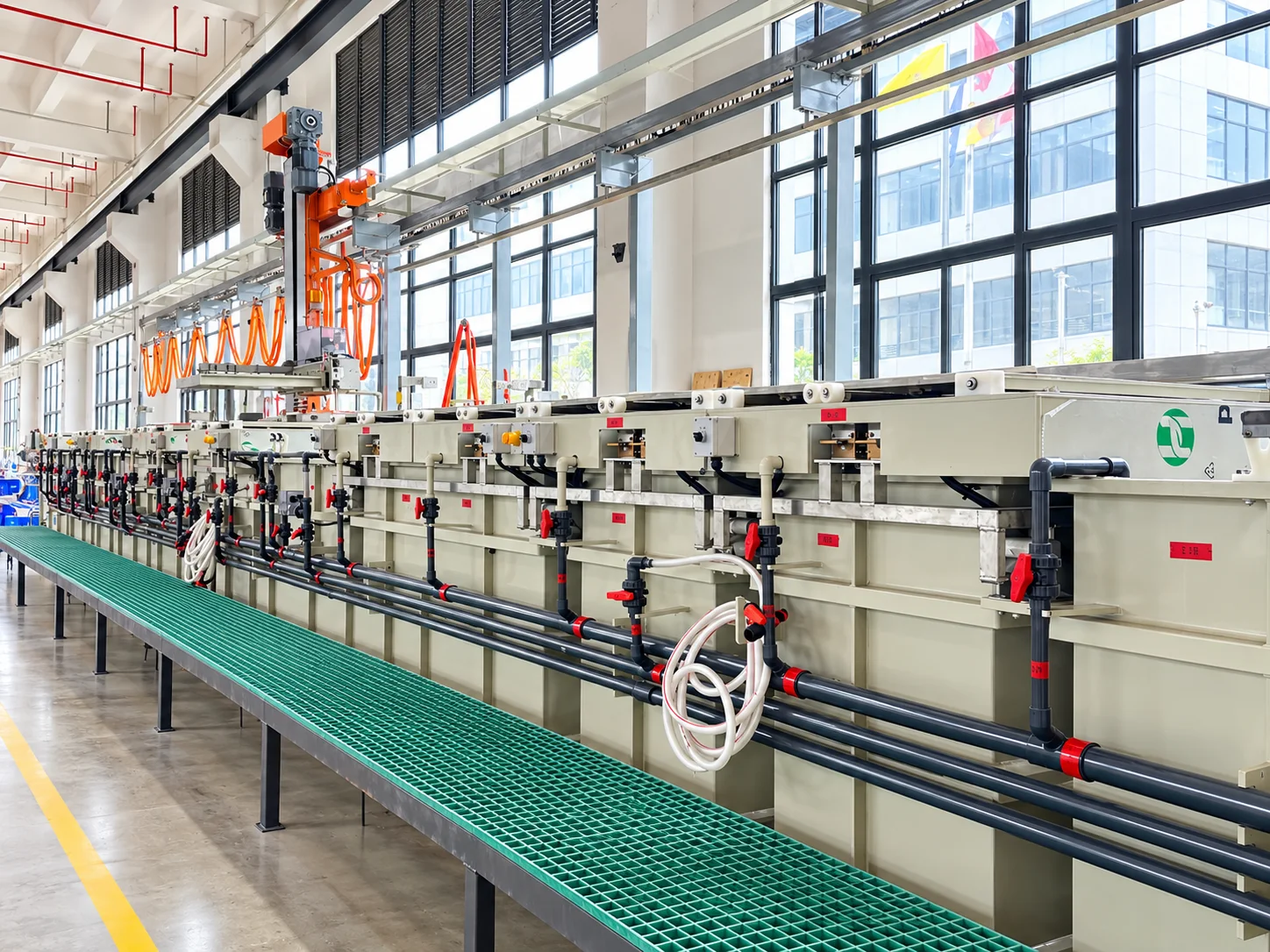
Equipment configurations can include immersion tanks, spray cleaning systems, ultrasonic units, chemical dosing equipment, filtration systems, heating units, and hot air drying stations. Tank materials, operating temperatures, treatment durations, and chemical circulation methods are selected to ensure compatibility with different metals and processing chemicals.
Pretreatment lines can be configured for manual, semi-automatic, or fully automatic operation. Integration with automatic gantry hoists, PLC and HMI control systems enables coordinated workpiece movement, accurate processing times, temperature monitoring, and consistent execution of treatment sequences.
Special attention is given to rinsing efficiency, chemical consumption, wastewater collection, exhaust ventilation, and maintenance accessibility. Counterflow rinsing arrangements and optimized chemical management can help reduce water usage and operating costs while supporting environmental requirements.
Typical process architectureProcess flow
Workpiece LoadingAlkaline DegreasingWater RinsingUltrasonic CleaningWater RinsingAcid Pickling / Rust RemovalWater RinsingSurface ActivationPhosphating / Conversion Coating (If Required)Multi-Stage Counterflow RinsingDI Water RinsingHot Air DryingFinal Inspection & Unloading
The displayed flow is an engineering reference. The final sequence, chemistry, dwell time and control points are confirmed for the customer’s process.
ApplicationsWhere this system fits
Metal Pretreatment Lines are widely used in manufacturing industries requiring effective surface cleaning, oxide removal, corrosion protection, and preparation for subsequent coating or finishing processes.
Automotive & Motorcycle Components: Remove oils, grease, rust, and surface contaminants from vehicle parts, fasteners, brackets, and metal assemblies before painting, plating, or powder coating.
Electroplating Industries: Prepare metal surfaces through degreasing, pickling, activation, and rinsing to improve plating adhesion and coating quality.
Powder Coating & Painting Lines: Provide cleaning, phosphating, and conversion coating processes to improve paint adhesion and corrosion resistance.
Aerospace Components: Support controlled surface preparation of aluminum alloys, steel, and precision components before protective coating applications.
Electronics & Electrical Equipment: Clean metal housings, connectors, enclosures, and electrical components before plating or surface finishing.
Hardware & Fasteners: Remove machining oils, oxidation, and manufacturing residues from screws, bolts, nuts, and industrial hardware.
Metal Fabrication & Sheet Metal Processing: Prepare fabricated steel, stainless steel, and aluminum parts for further coating, assembly, or finishing operations.
Industrial Machinery & Equipment: Treat machine frames, structural components, mechanical parts, and equipment housings to improve coating durability and corrosion protection.
Medical Device Manufacturing: Support controlled cleaning and surface preparation of compatible metal instruments, equipment components, and precision parts.
Aluminum Surface Treatment: Provide cleaning, etching, desmutting, and activation processes before anodizing, conversion coating, or other aluminum finishing operations.