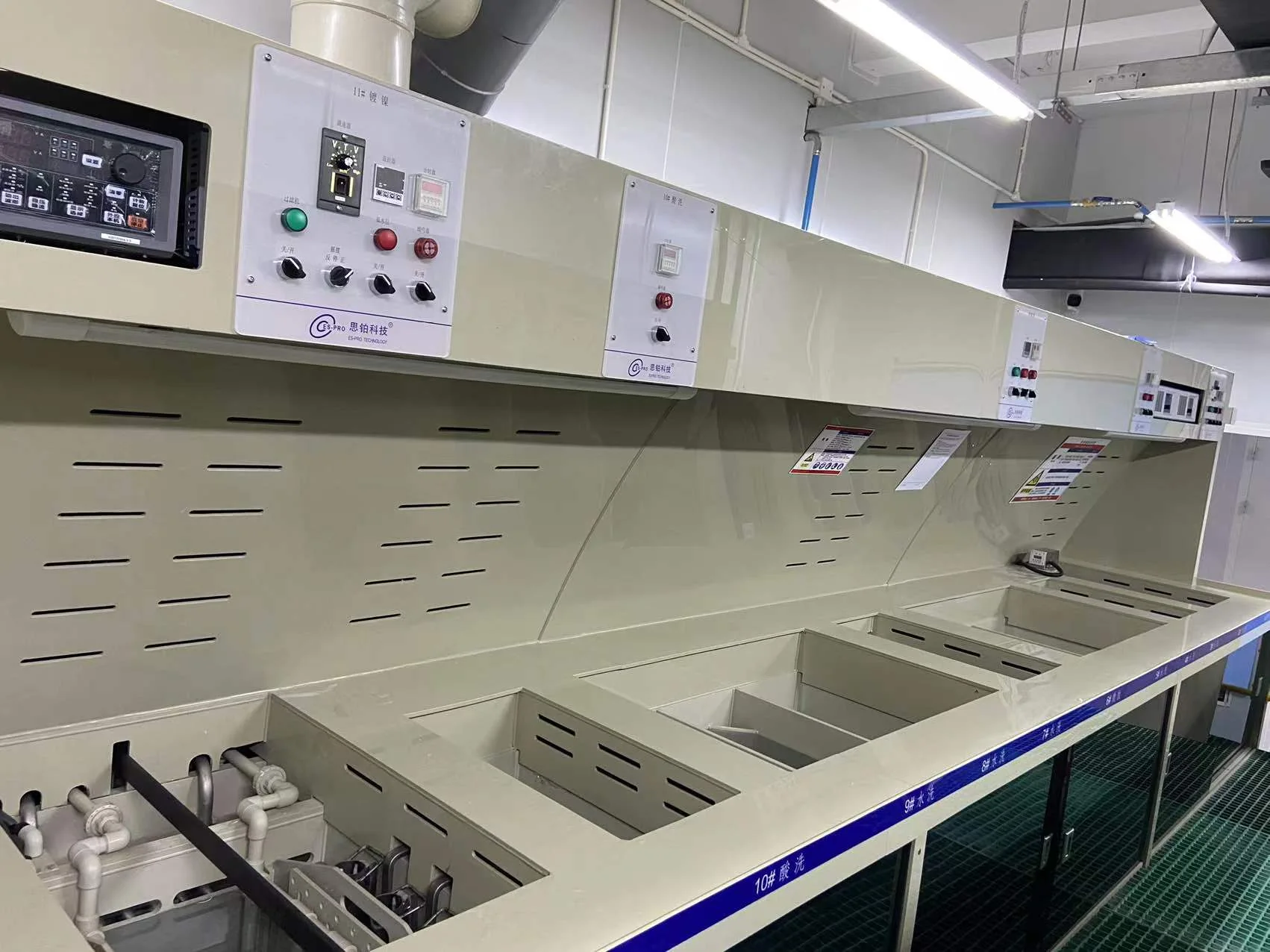
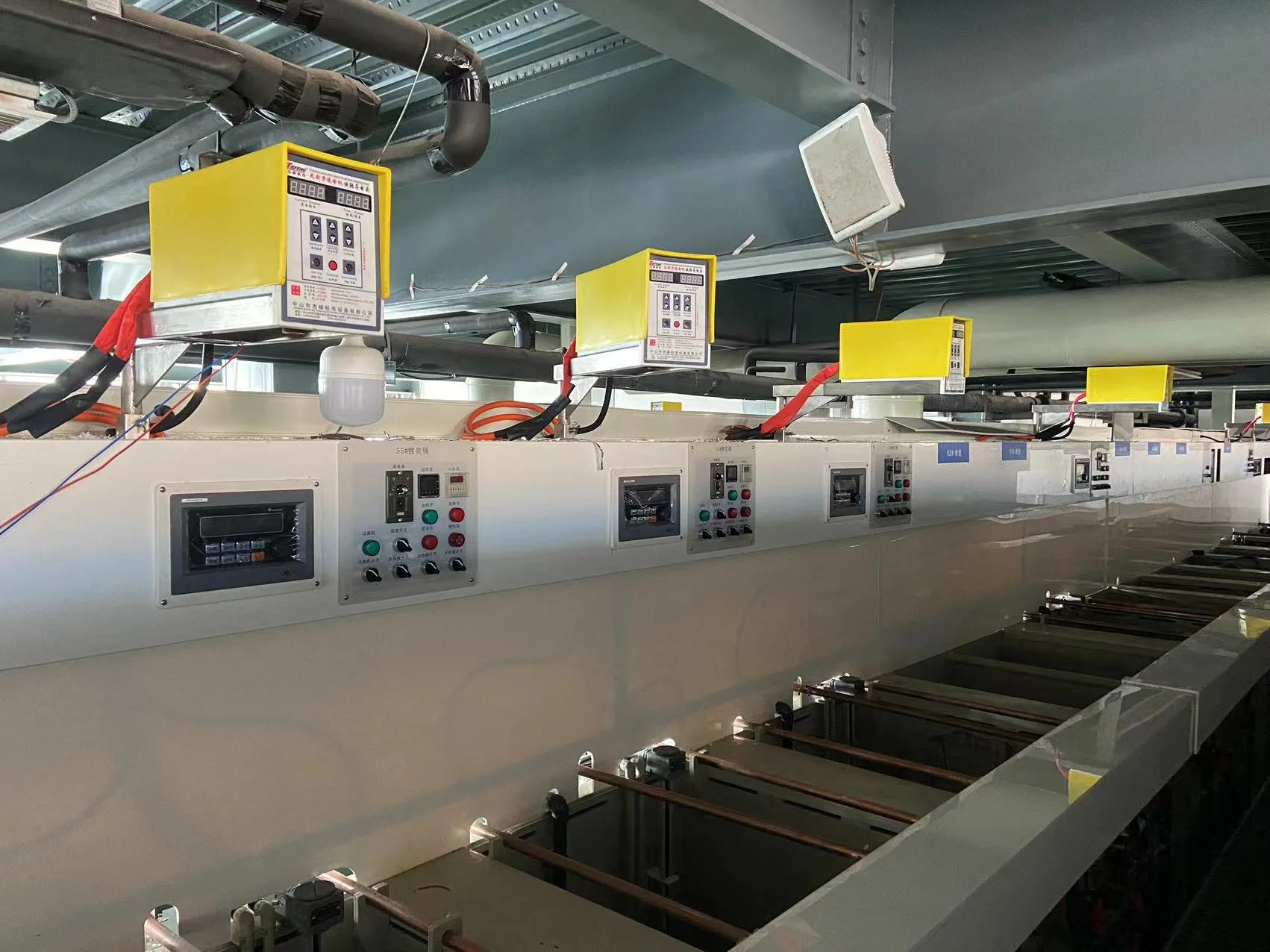
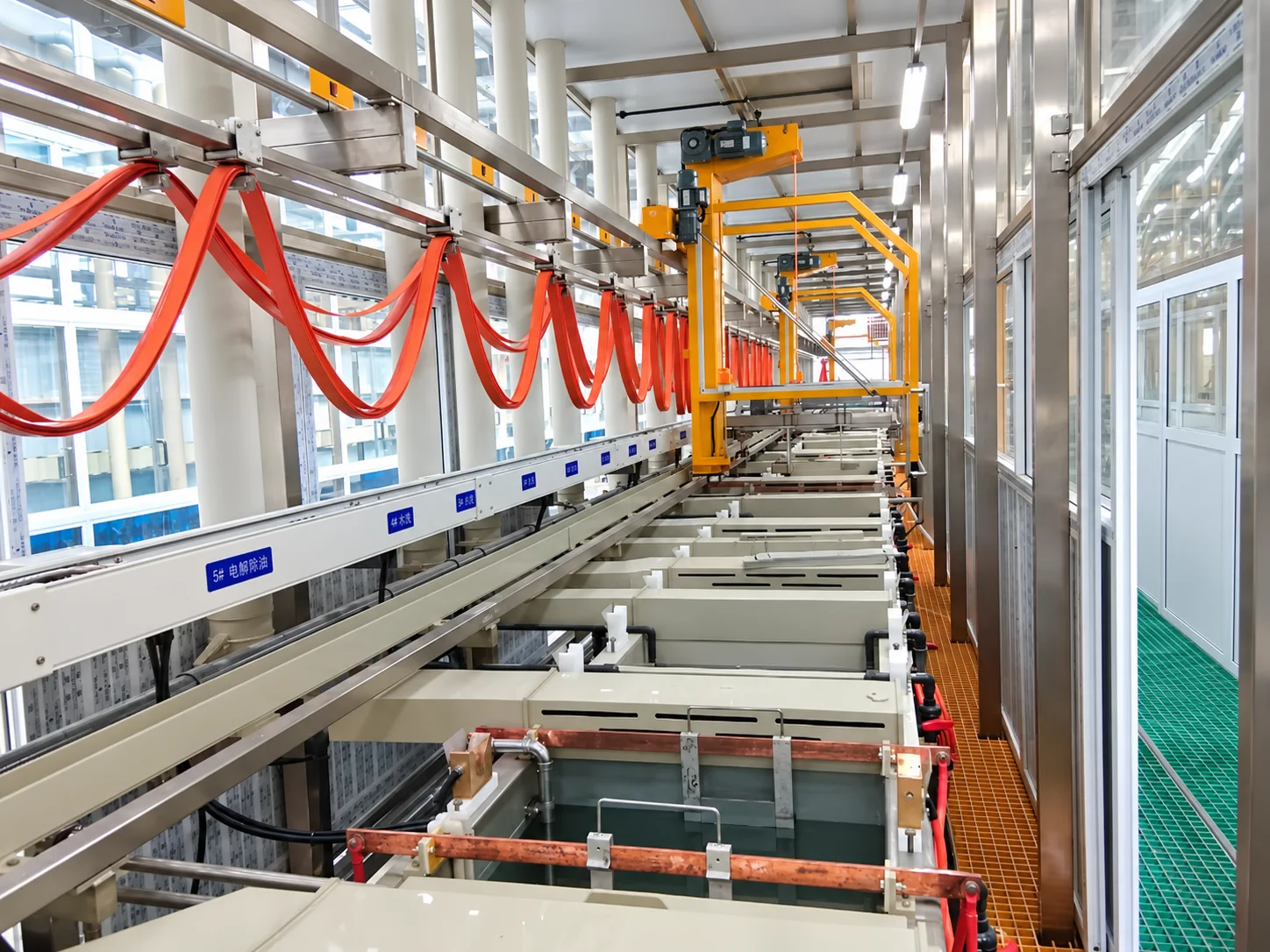
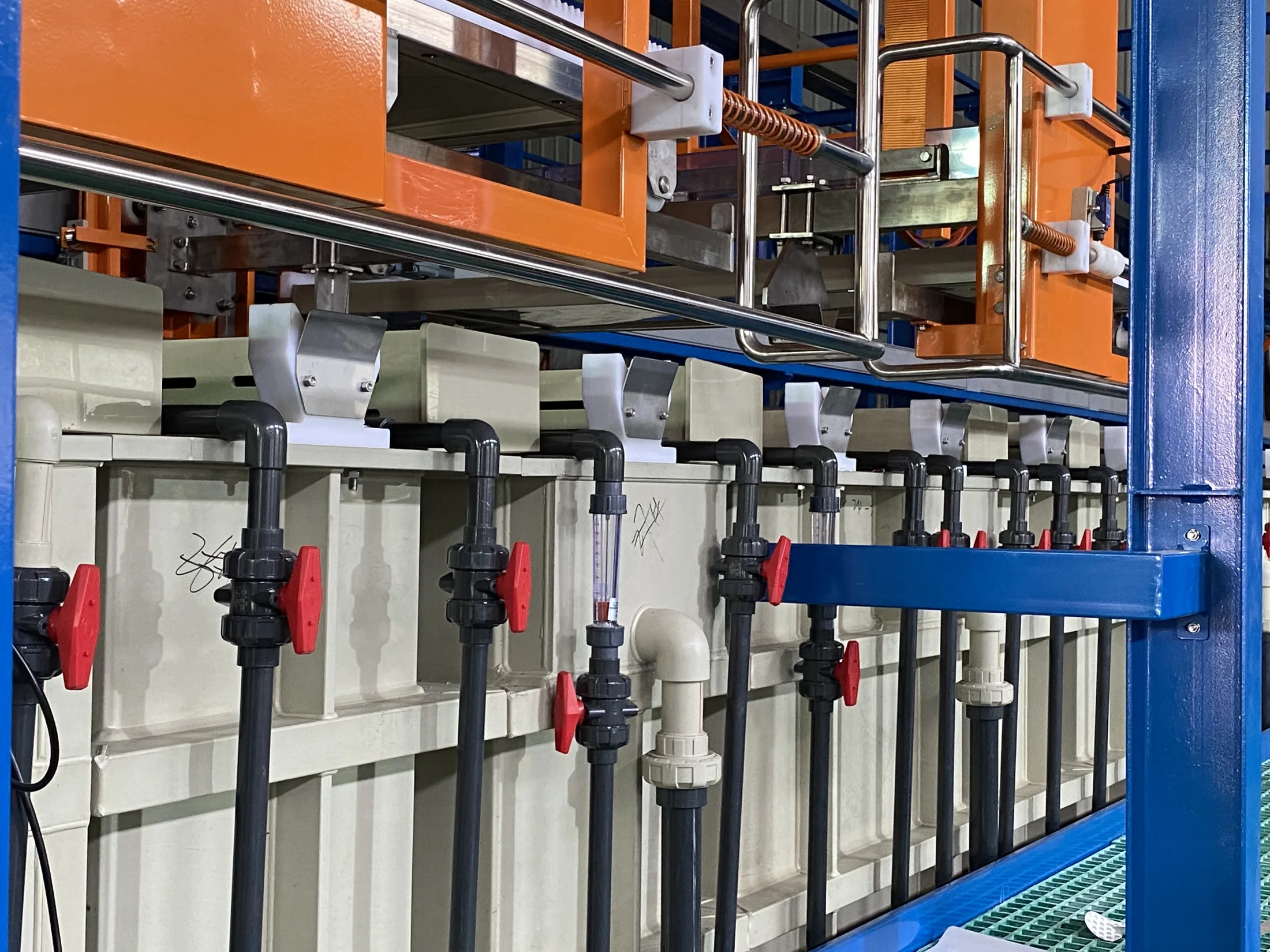
System overviewEngineered around your production requirement
Acidic Electroless Nickel Plating is widely applied in industries requiring high-quality surface finishes, dimensional precision, and long-term component protection. Unlike conventional electroplating, the process relies on an autocatalytic chemical reaction, allowing nickel-phosphorus coatings to form uniformly without external electrical current.
A typical plating system operates under carefully controlled temperature, pH, chemical concentration, and solution circulation conditions. Heating systems, filtration units, chemical dosing equipment, and temperature monitoring devices are incorporated to maintain bath stability and consistent deposition rates.
Tank construction and equipment materials are selected according to chemical compatibility and operating temperature requirements. Proper solution agitation, workpiece positioning, and filtration arrangements help minimize surface defects and maintain uniform coating quality throughout the production cycle.
The system can accommodate different component sizes, production capacities, and coating thickness requirements. Additional features may include automated workpiece transfer, chemical replenishment, bath monitoring, and integration with PLC, HMI, or SCADA systems for improved process management.
From pretreatment and surface activation to electroless nickel deposition, rinsing, and post-treatment, each processing stage is configured to support coating adhesion, corrosion resistance, and reliable product quality. The overall system design emphasizes chemical efficiency, operational stability, maintenance accessibility, and consistent manufacturing performance.
Typical process architectureProcess flow
LoadingAlkaline DegreasingWater RinsingAcid PicklingWater RinsingSurface ActivationDI Water RinsingAcidic Electroless Nickel PlatingRecovery RinsingMulti-Stage Counterflow RinsingHot DI Water RinsingHot Air DryingFinal Inspection & Unloading
The displayed flow is an engineering reference. The final sequence, chemistry, dwell time and control points are confirmed for the customer’s process.
ApplicationsWhere this system fits
Electroless nickel plating is widely used for components that require uniform coating thickness, corrosion resistance and reliable coverage on complex geometries.
Precision engineering components
Automotive parts
Aerospace components
Electronic and electrical parts
Valves, pumps and fittings
Moulds and tooling
Machinery components
Parts with complex shapes, internal surfaces or tight dimensional requirements