System overviewEngineered around your production requirement
Modernizing an existing electroplating line requires a detailed understanding of its operating conditions, mechanical structure, process limitations, and production demands. A comprehensive upgrade strategy focuses on improving critical equipment and process performance while retaining functional components wherever practical.
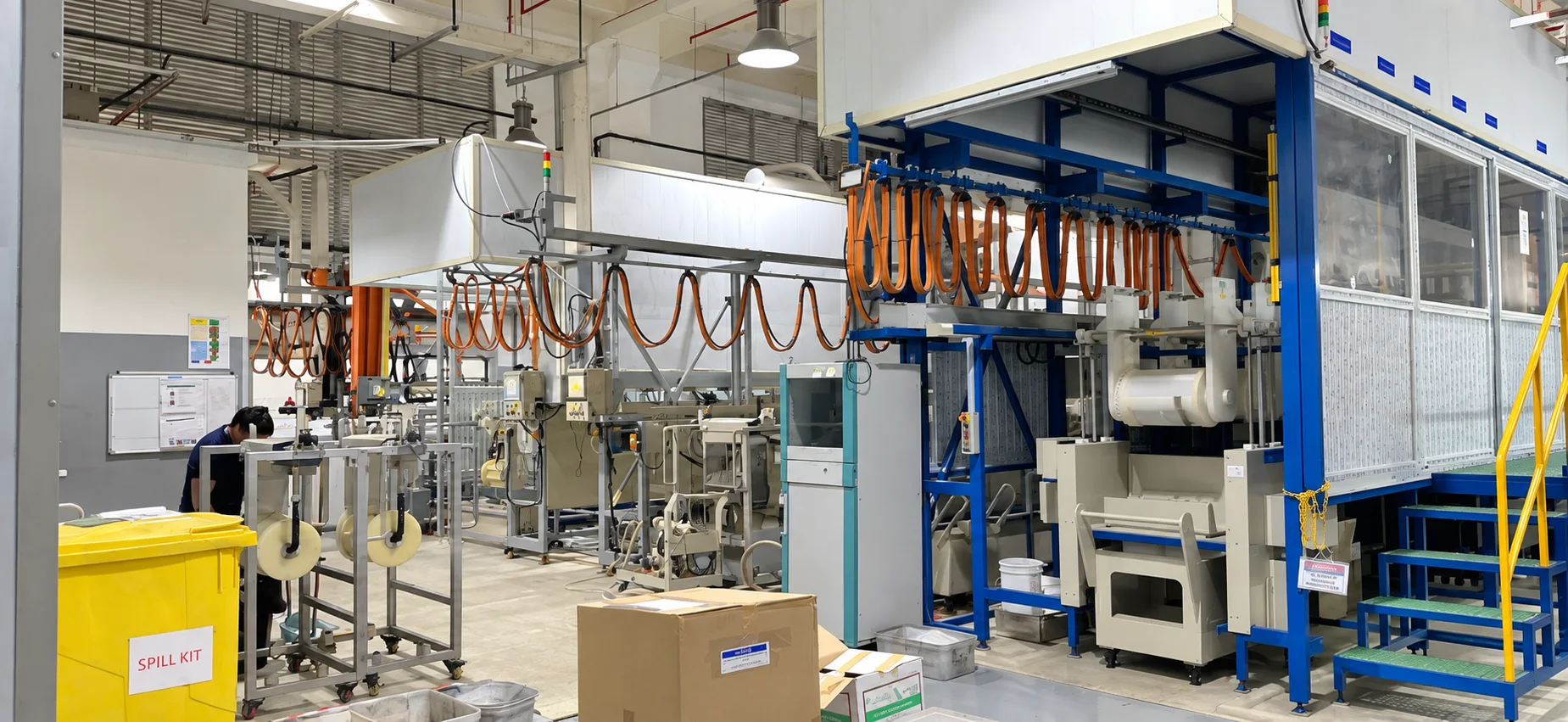
The engineering assessment covers tank conditions, structural integrity, chemical compatibility, heating and cooling performance, filtration efficiency, electrical distribution, and material handling arrangements. Based on the findings, targeted modifications can be implemented to eliminate production bottlenecks, improve process stability, and address recurring equipment failures.
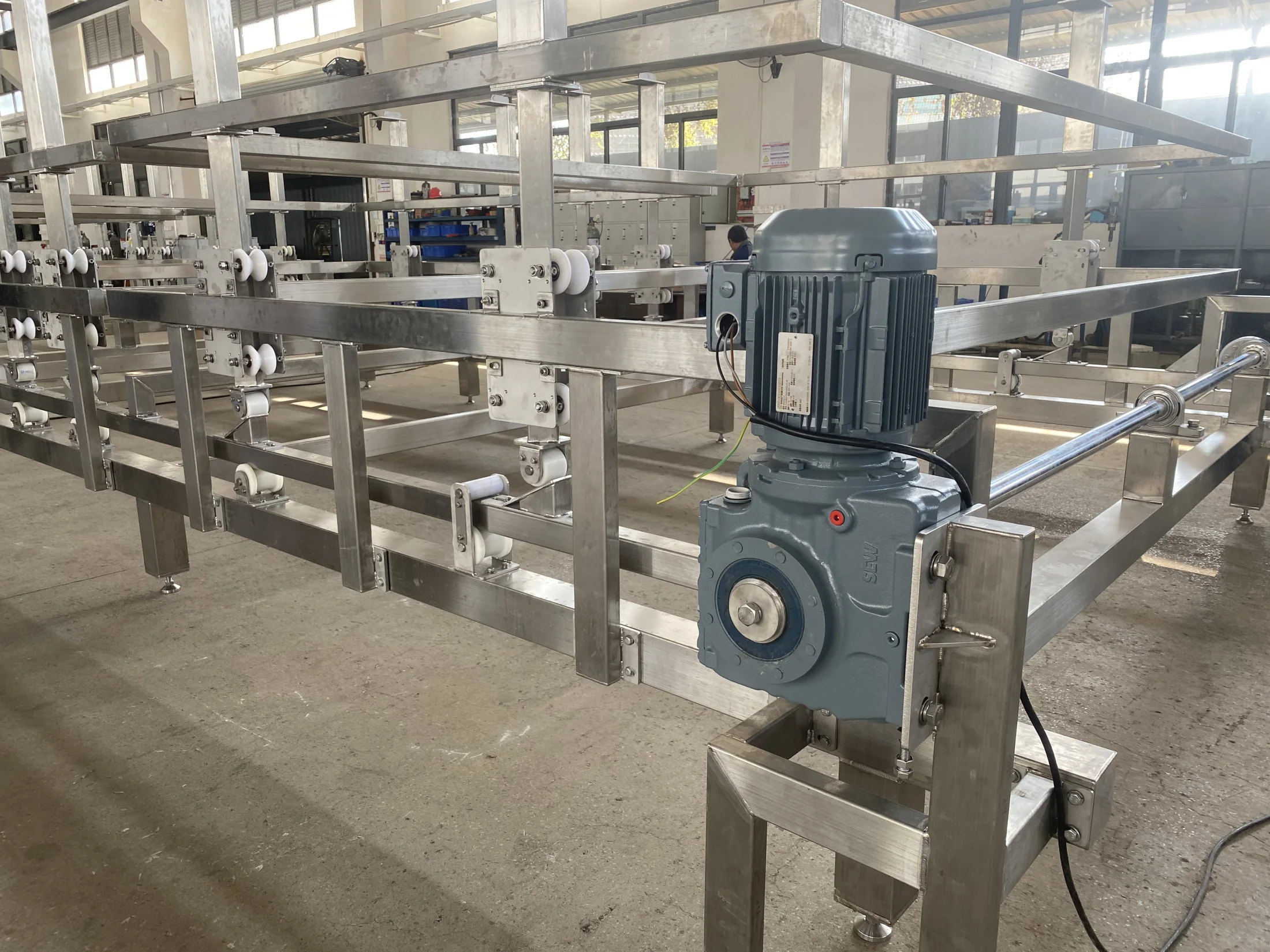
Mechanical improvements may involve tank refurbishment, piping replacement, improved solution circulation, upgraded exhaust collection, and optimized workpiece positioning. Process-related modifications can include enhanced temperature regulation, rectifier performance, chemical dosing, and rinsing efficiency to achieve more consistent coating quality and reduce chemical and water consumption.
Upgrade projects are planned around existing factory layouts, utility connections, and production schedules. Particular attention is given to installation sequencing, compatibility between new and retained equipment, and commissioning procedures to minimize shutdown periods.
Through systematic equipment evaluation, practical engineering modifications, and performance verification, electroplating line upgrades provide a cost-effective approach to extending production capabilities, improving maintainability, and preparing facilities for future manufacturing requirements.
Typical process architectureProcess flow
Existing Electroplating Line AssessmentEquipment Condition InspectionProduction Bottleneck IdentificationUpgrade Requirements AnalysisEngineering Design & Modification PlanningEquipment & Component SelectionMechanical & Electrical System UpgradesPLC & Control System IntegrationInstallation & System TestingProcess Optimization & CommissioningProduction Performance VerificationOperator Training & Technical Documentation
The displayed flow is an engineering reference. The final sequence, chemistry, dwell time and control points are confirmed for the customer’s process.
ApplicationsWhere this system fits
Electroplating Line Upgrade solutions are suitable for existing surface treatment facilities seeking to improve equipment performance, production capacity, coating quality, and operational reliability.
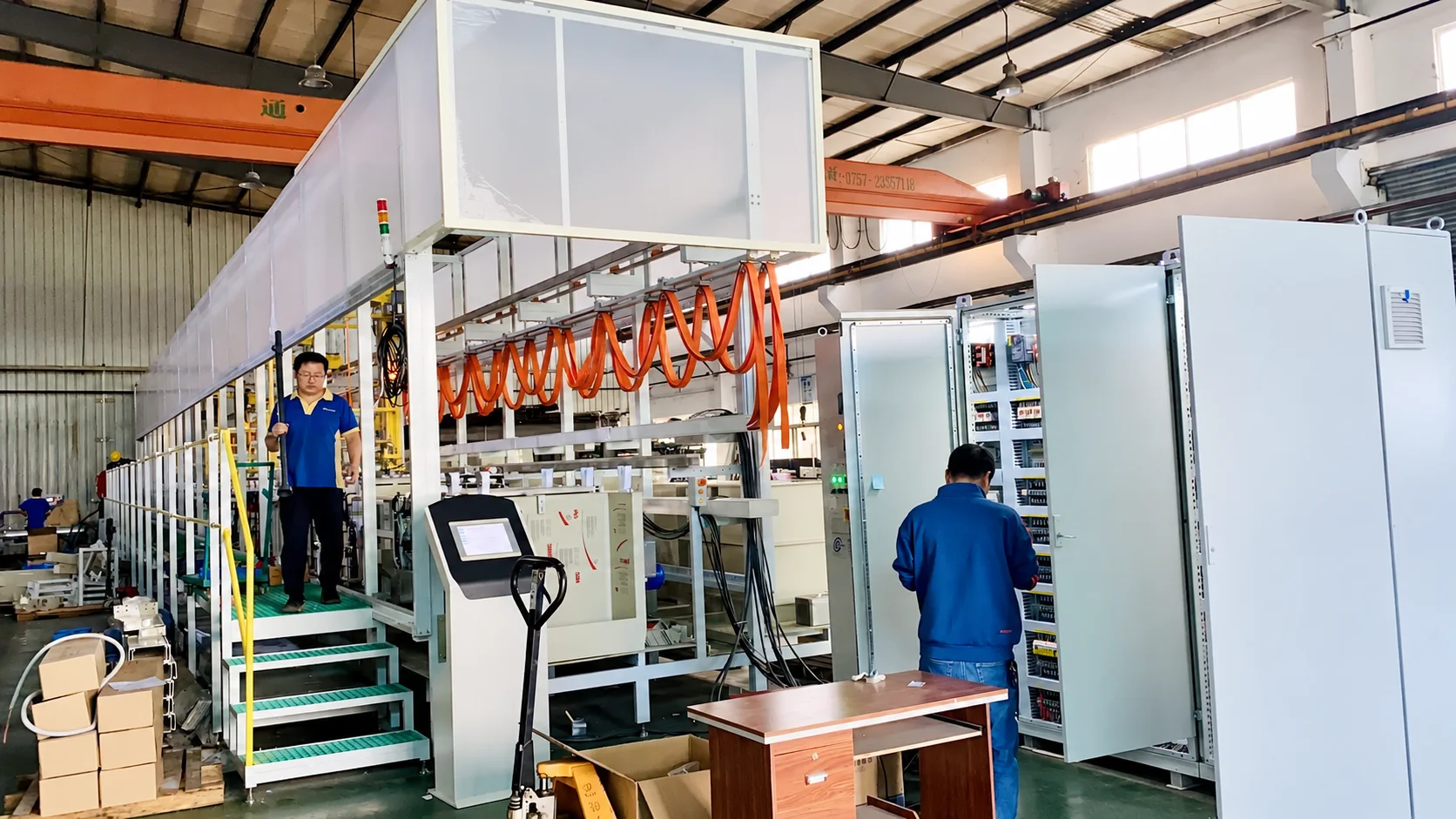
Automatic Electroplating Lines: Modernize aging equipment, optimize tank arrangements, improve transfer efficiency, and enhance overall production performance.
Manual & Semi-Automatic Plating Lines: Upgrade existing operations with automated hoists, improved workpiece handling, and more efficient process controls.
Barrel Plating Lines: Improve barrel rotation mechanisms, electrical contact systems, loading and unloading arrangements, and solution circulation.
Rack Plating Lines: Enhance rack positioning, current distribution, anode arrangements, and material handling to improve coating uniformity.
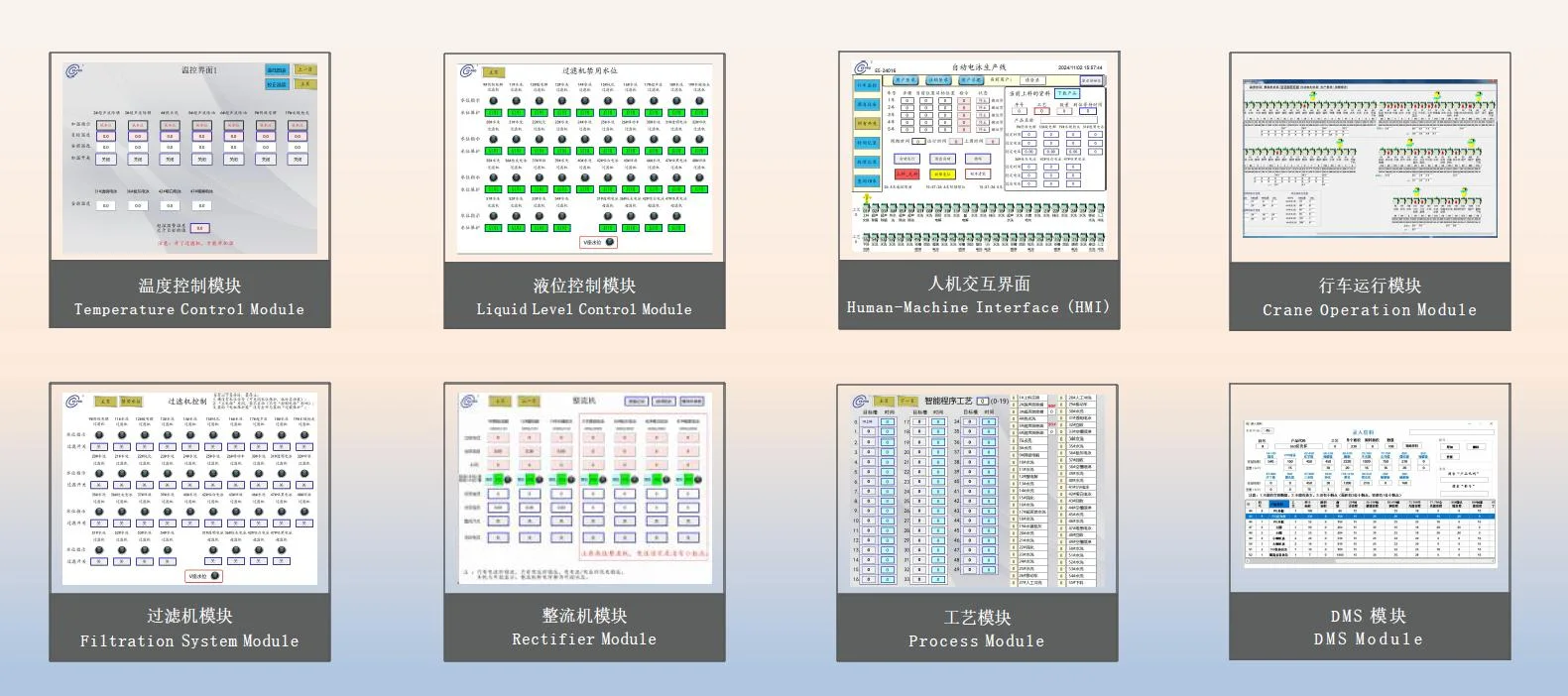
Rectifier & Electrical System Upgrades: Replace outdated rectifiers, improve power distribution, and introduce advanced current and voltage control capabilities.
Tank & Piping Modernization: Refurbish deteriorated tanks, replace corrosion-damaged piping, and improve chemical resistance and maintenance accessibility.
Filtration & Chemical Circulation Systems: Upgrade filtration pumps, solution circulation, agitation systems, and chemical dosing equipment to improve bath stability.
Water & Energy Efficiency Improvements: Optimize rinsing arrangements, introduce counterflow rinsing, improve heating efficiency, and reduce utility consumption.
Production Capacity Expansion: Modify existing tank layouts, increase processing capacity, and integrate additional equipment to accommodate higher production demands.
Environmental & Safety Improvements: Upgrade exhaust systems, wastewater collection, chemical containment, and operator protection measures to meet applicable safety and environmental requirements.